
What is a cold wallet? It stores cryptocurrency offline, away from the internet. A cold wallet holds the private keys that control your coins, and it keeps those keys off every connected device. Hackers cannot reach keys that never touch the internet. First, this guide explains offline storage, safe setup, and what a mini bitcoin miner can and cannot do.
This guide gives general information only. It is not financial advice, and it never tells you what to buy or sell. Crypto prices can fall as well as rise. Only use money you can afford to lose.
What Is a Cold Wallet?
First, it helps to know where your coins actually live. Your coins live on the blockchain, not inside a wallet. In fact, a wallet stores the private keys that prove the coins belong to you and let you move them. Think of the public key as an account number, and the private key as the code that unlocks it. Anyone with the private key controls the coins.
So what is a cold wallet in plain terms? It is a wallet that keeps its private keys offline at all times. The keys never sit on a phone, a laptop, or a website. After that, when you want to send coins, the wallet signs the transaction offline, inside the device. Only the signed transaction travels to the network. The keys stay put. In short, a cold wallet trades a little convenience for much stronger security.
What Is a Cold Wallet vs a Hot Wallet?
First, a hot wallet stays connected to the internet. Phone apps, browser extensions, and exchange accounts all count as hot wallets. Also, they suit daily use and small amounts. You can send coins in seconds, and you can trade fast. That speed comes with a cost: malware, fake apps, and phishing attacks can reach keys that live online, and an exchange can freeze your funds.
So what is a cold wallet for? It suits the opposite job: coins you plan to keep for months or years. It takes longer to send coins, since you must plug the device in and confirm each step by hand. In return, online attackers cannot touch the keys. In short, use a hot wallet like cash in your pocket, and a cold wallet like a safe at home. Keep small spending money online, and keep larger holdings offline.
How Private Keys and Seed Phrases Work
When you create a cold wallet, the device gives you a seed phrase. The phrase holds 12 or 24 ordinary words, in a fixed order. Those words can rebuild every private key in the wallet. In other words, the phrase IS the wallet. Anyone who reads it can take your coins from anywhere in the world.
So guard the phrase like cash. Never type it into a website, an app, or a chat message. Never photograph it, and never save it in email or cloud notes. Next, write it on paper by hand, in order, and check every word twice. Keep one copy safe at home, and a second copy in a different place. However, if you lose the device but keep the phrase, you can restore the wallet on a new device. If you lose both, the coins are gone for good. No company can reset them for you.
Types of Cold Wallet
Three main types exist, and each suits a different user.
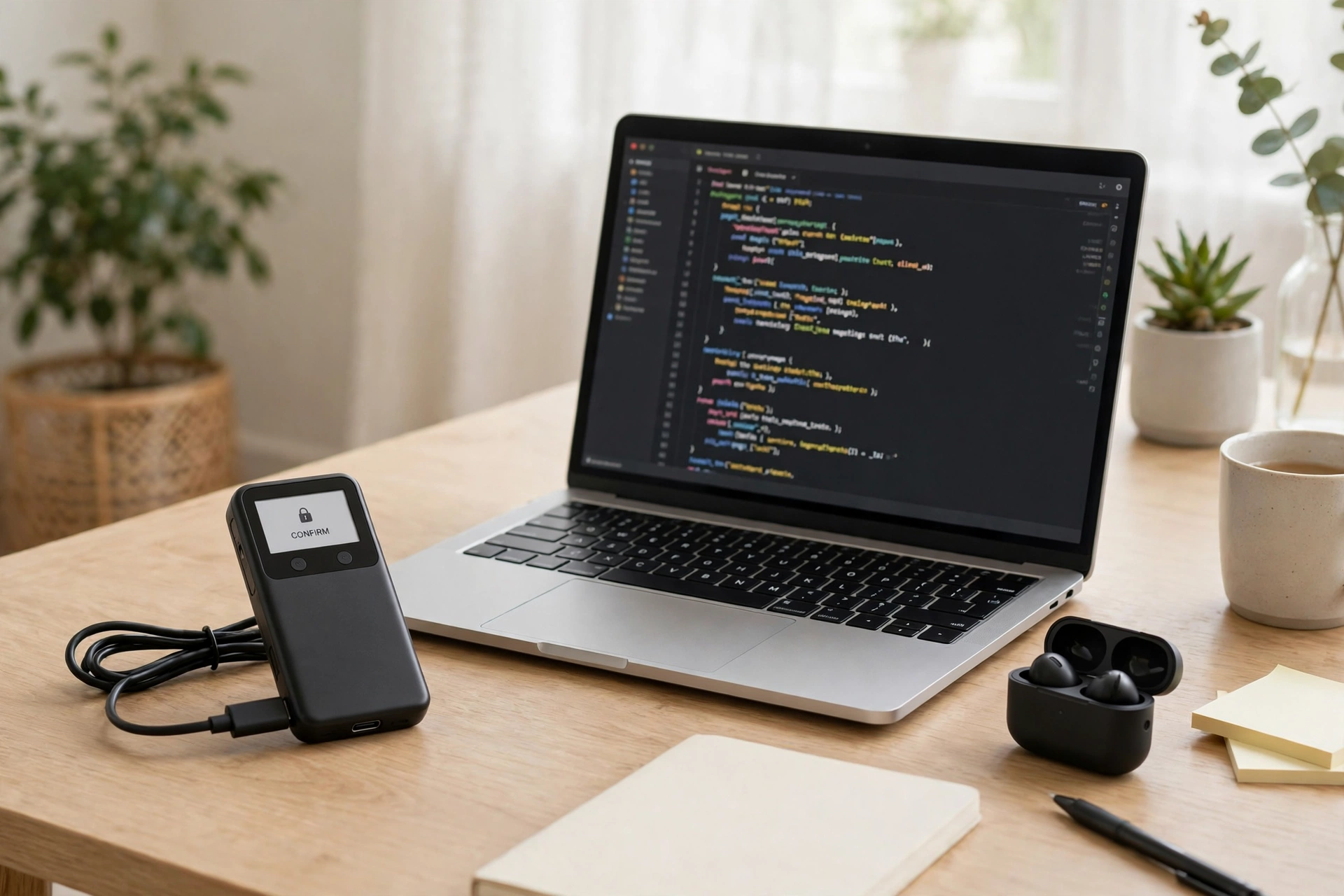
Hardware wallet. A hardware wallet is the most common answer to what is a cold wallet. It is a small device, about the size of a USB stick, with a screen and buttons. It stores your keys inside the device and signs transactions there, so the keys never touch your computer. Buy it new, direct from the maker — never buy a used one.
Paper wallet. A paper wallet is a printed sheet with your public and private keys, often as text and a QR code. Also, it costs almost nothing and sits fully offline. It also tears, fades, and burns, and spending from it takes care.
Air-gapped device. An air-gapped device is a computer or phone that never connects to the internet. Next, you move transactions to it by QR code or USB stick, sign them, and move the signed result back. It gives the strongest privacy, but setup takes patience.
How to Set Up a Cold Wallet Safely
Before you begin, remember what is a cold wallet: offline keys that only you control. Set it up slowly, and check each step as you go.
First, buy the device new from the maker’s own website — never a used one, and never from a marketplace seller. A tampered device can steal your coins. Next, check the seal and packaging when it arrives. Then download the maker’s official app only from the official site, and set a strong PIN.
After that, the device shows your seed phrase on its screen. Write the words on paper by hand, in order, and read them back twice. Do not photograph the screen. Then send a small test amount first and check that it arrives. Only then move the rest. Finally, store the paper phrase somewhere safe, and store a second copy somewhere else. Update the device software through the official app when the maker releases a new version.
Common Cold Wallet Mistakes to Avoid
Most losses come from simple mistakes, not clever hacks. Watch for these.
First, never share your seed phrase with anyone. Real support staff never ask for it. In fact, anyone who asks is a scammer. Next, never store the phrase in a photo, an email, or a cloud note. In fact, hackers search those places first. Also, never buy a used device or one from a marketplace. Only buy new, direct from the maker.
Never type your phrase into a website or an app. For example, a real wallet never asks you to do that. Keep the device and the phrase backup in different places, so one theft or fire cannot take both. Finally, never skip the small test transfer. A test costs little, and it proves the setup works.
Mini Bitcoin Miner: What It Can and Cannot Do
A mini bitcoin miner is a small, low-power computer built to mine bitcoin at home. Some are tiny boxes that draw less power than a light bulb. Others are larger home units that double as heaters. In fact, they all compete to add the next block to the Bitcoin network. The winner earns the block reward, currently 3.125 BTC plus fees.
A mini miner holds a tiny share of the whole network. On a shared mining pool, it earns a small, steady trickle — often only pennies a day. On the other hand, solo mining works differently. A solo miner skips the pool and plays for the full block reward alone. That makes it a lottery ticket, not a wage. Most small solo miners never find a block.
Electricity decides whether a mini miner makes sense. For example, the device runs all day, and UK electricity is not cheap. A miner that earns pennies can cost more in power than it brings in. Check your tariff and work out the running cost first. Heat and noise matter too. Small miners run quietly, about as loud as a desk fan. Larger units hum and throw out real heat, so give them space and airflow.
A mini bitcoin miner suits hobbyists and learners. It teaches you how mining works, and it supports the network. It does not suit anyone looking for income, so never buy one as an investment.
Crypto Scams to Avoid
Scammers target crypto users every day. The most common tricks are easy to spot once you know them.
First, fake support messages top the list. A message claims your wallet needs urgent action, then asks for your seed phrase. Real support never asks for it. Next come fake wallet apps and copycat websites. They look real, but they steal your keys or your coins. Only download apps from the maker’s official site, and check the web address carefully.
Then come “double your coins” giveaways and fake airdrops. In fact, no stranger doubles your money. Phishing emails and texts work the same way. They push you to click a link and log in on a fake page. Our phishing scams guide explains how these tricks work and how to spot them before you click.
What Is a Cold Wallet FAQs
Do I need a cold wallet?
It depends on how much you hold and how long you keep it. Small amounts for daily use can stay in a hot wallet. Larger amounts, or coins you hold for months or years, suit offline storage.
Can a cold wallet be hacked?
Online attackers cannot reach keys that stay offline. The real risks are physical: loss, theft, a tampered device, and a leaked seed phrase. So buy new from the maker and guard the phrase.
What happens if I lose my cold wallet?
Buy a new device and restore the wallet with your seed phrase. If you lose the phrase too, no one can recover the coins.
Is a paper wallet still a good idea?
A paper wallet works and costs almost nothing. It also tears, fades, and burns. Most beginners find a hardware wallet easier to use.
Can I use a mini bitcoin miner with a cold wallet?
Yes. Mining rewards go to an address you control. You can send those rewards to offline storage for safekeeping, just like any other coins.
Do I pay tax on crypto in the UK?
HMRC may treat crypto gains as taxable, and the rules can change. Check HMRC guidance or speak to a tax adviser before you act.
Now you know what is a cold wallet and how to use one safely. Start small, stay offline, and guard your seed phrase. Finally, set it up slowly and test it with a small amount.